









Introduction: The Geological Marvel of Karst in China
Karst landscapes, a product of the dissolution of soluble rocks such as limestone, gypsum, and dolomite, represent some of the most unique and breathtaking terrains on Earth. In China, these landscapes are not only a striking feature of the natural environment but also hold significant cultural and ecological importance. From the limestone towers of Guilin to the sprawling Stone Forest of Yunnan, China’s karst regions are among the most dramatic geological formations on the planet, characterized by towering rock spires, deep caves, winding rivers, and lush green forests.
This article delves into the geology, formation, and significance of the karst landscapes in China, examining their physical characteristics, the processes that created them, and their ecological and cultural value. These karst topographies are not only geologically fascinating but also serve as critical habitats for diverse species, rich cultural heritage sites, and an enduring symbol of the dynamic processes that shape our world.
1. The Geological Formation of Karst Landscapes
1.1 What is Karst?
The term karst refers to a type of landscape formed by the dissolution of soluble rocks, primarily limestone, by slightly acidic water over thousands to millions of years. Karst regions are known for their dramatic geological features, including limestone towers, caves, sinkholes, underground rivers, and gorges. This landscape evolves as rainwater, slightly acidic from dissolved carbon dioxide, seeps into cracks in the rock, dissolving it and expanding the fractures.
The process begins when water, slightly acidic due to its absorption of carbon dioxide, interacts with the limestone rock. This causes the rock to dissolve, leading to the formation of caves and underground features. Over time, the continued dissolution of limestone creates striking surface features such as cone-shaped peaks, deep ravines, and plateaus. The result is a dramatic and visually stunning landscape, often described as alien or otherworldly due to the unique shapes and textures created by natural forces.
1.2 The Role of Tectonic Activity in Karst Development
While the dissolution of rock plays a central role in karst formation, tectonic forces also have a significant influence. In many karst regions, such as those found in China, tectonic forces have uplifted limestone deposits, exposing them to weathering and erosion. In China, the Himalayan orogeny (the collision of the Indian Plate with the Eurasian Plate) has been a key event in the uplift of the Hengduan Mountains and Yunnan Plateau, contributing to the creation of many karst landscapes.
The tectonic uplift exposes layers of limestone that were once buried beneath the Earth’s surface, allowing them to be carved by erosion and dissolution. This interaction between tectonic movements and the dissolution of limestone has resulted in the creation of some of the most visually distinctive and ecologically significant karst landscapes on Earth.
2. Famous Karst Regions in China
2.1 The Guilin-Li River Karst Landscape
One of China’s most iconic karst regions is the Guilin-Li River area, located in Guangxi Province. Famous for its towering limestone peaks and winding river, this region is considered one of the most picturesque landscapes in China. The karst formations in Guilin rise dramatically from the Li River, their distinctive shapes often reflecting in the water, creating a surreal and captivating view.
The Li River, which flows through this region, is equally impressive. Surrounded by the jagged limestone peaks, the river winds through gorges, passing through lush forests and traditional villages. The landscape is often considered the epitome of classic Chinese landscape painting, with its iconic peaks having inspired poets, painters, and philosophers for centuries.
One of the most notable geological features in the area is Reed Flute Cave, a massive limestone cave adorned with stalactites and stalagmites, formed over millennia. The intricate formations within the cave are an excellent example of the types of geological features that result from karstification.
2.2 The Stone Forest of Yunnan
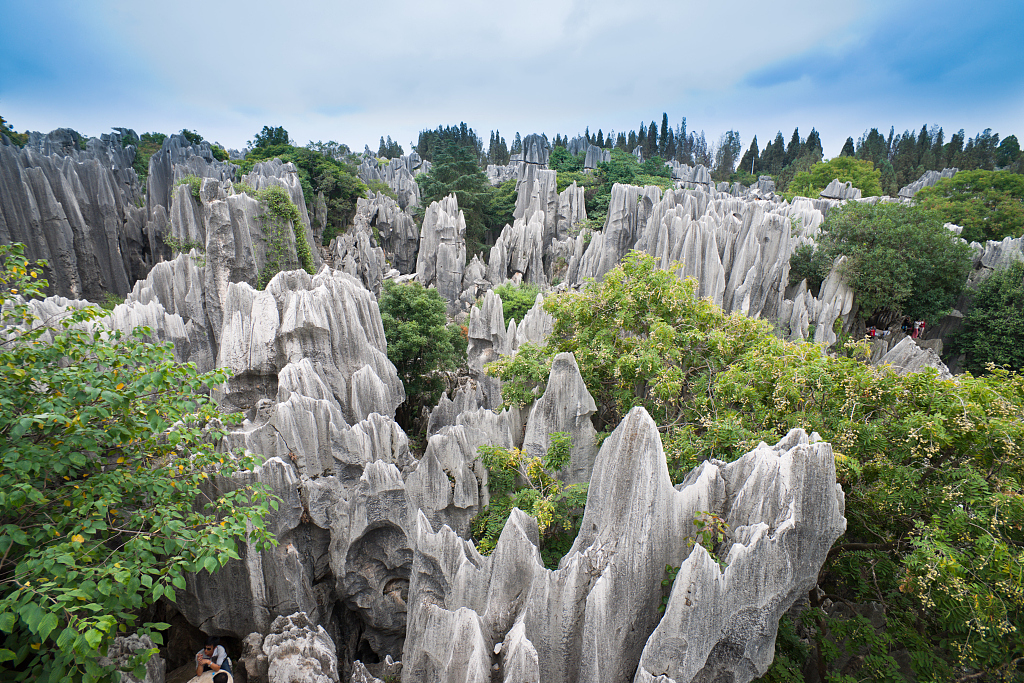
Another notable karst landscape in China is the Stone Forest (Shilin), located in Yunnan Province near Kunming. The Stone Forest is a vast area of limestone pillars that resemble a petrified forest, a phenomenon known as tower karst. These towering, spire-like formations are the result of the erosion of limestone by water over millions of years.
The Stone Forest covers an area of over 400 square kilometers and is one of the most visited karst sites in China. The unusual shapes of the limestone formations—resembling everything from trees to animals—have earned the area the nickname “Forest of Stone.” The region is also a UNESCO World Heritage Site and an important cultural landmark for the Sani people, an ethnic group indigenous to the region. The Sani people have long regarded the Stone Forest as a sacred site, adding an element of mysticism to the natural beauty of the landscape.
2.3 The Karst Mountains of Guangxi
The Guangxi Zhuang Autonomous Region, in southern China, is home to some of the most dramatic karst landscapes in the country. The Longsheng Rice Terraces are an iconic feature of this region, where farmers have cultivated rice on steep karst slopes for over 600 years. These terraces create a stunning visual contrast between the lush green fields and the sharp limestone peaks that rise above them.
The Guilin-Li River landscape is also part of Guangxi, but the region’s karst topography extends to areas like Yangshuo, where steep limestone mountains dominate the rural landscape. The Yangshuo region is known for its dramatic limestone peaks, often shrouded in mist, and is a popular destination for travelers seeking to experience the beauty of karst hills in their natural state.
2.4 The Fengjie Karst Caves
In Fengjie County, located in Chongqing, karst caves represent yet another extraordinary geological feature in China. These caves are carved into the limestone of the Wu Gorge and the Yangtze River Basin. The caves, some of which are filled with stalactites and stalagmites, offer an excellent opportunity for geologists and tourists to observe the underground manifestations of karst processes.
The Fengjie Karst Cave System is still being studied by geologists, who continue to map its intricate features. The caves are important not only for their geological significance but also for their historical value, as many of them have been used as religious sites or burial grounds for thousands of years.
3. Ecological and Cultural Importance of Karst Landscapes
3.1 Biodiversity in Karst Regions
Despite the seemingly barren appearance of many karst landscapes, these regions are incredibly rich in biodiversity. The rocky terrain and complex topography of karst regions create a variety of microhabitats that support diverse species. For example, the Ailuropoda melanoleuca (giant panda) can be found in some of China’s karst forests, as well as a variety of other endangered species, such as the Chinese pangolin and the Yunnan golden monkey.
The vegetation in karst landscapes is often adapted to the poor soil conditions caused by the dissolution of limestone. Tropical plants and alpine meadows thrive in these areas, offering a rich environment for endemic plant species. The karst regions also support a variety of rare bird species and insects, making these areas valuable for conservation efforts.
3.2 Cultural Significance of Karst Landscapes
The cultural importance of karst landscapes in China cannot be overstated. These landscapes have not only shaped the way people live but have also influenced the spiritual and cultural life of local communities. The Stone Forest of Yunnan, for example, is considered a sacred place by the Sani people, and many of the region’s karst formations are imbued with mythological significance.
In regions like Guilin and Yangshuo, the karst peaks have been the inspiration for Chinese landscape paintings for centuries. The karst mountains of Guilin are particularly iconic in Chinese art, often featured as symbols of the harmony between nature and humanity.
Conclusion: Preserving China’s Karst Landscapes for Future Generations
China’s karst landscapes are a testament to the forces of nature and time, creating some of the most visually stunning and ecologically significant regions in the world. From the towering peaks of Guilin to the mystical Stone Forests of Yunnan, these geological wonders offer insight into the Earth’s dynamic processes and serve as a reminder of the importance of preserving natural heritage.
As these landscapes continue to face pressures from tourism, urbanization, and climate change, it is crucial to balance economic development with conservation efforts. Preserving China’s karst regions is not only essential for the biodiversity they support but also for future generations to appreciate the geological and cultural heritage that makes them so unique.
In exploring these landscapes, we not only discover the beauty of nature but also deepen our understanding of the processes that have shaped our planet. Karst landscapes are living symbols of the Earth’s ever-changing character, and they remind us of the fragility and resilience of the natural world.