








Introduction
Packing for a trip is an art that many travelers strive to perfect, but it’s an art form that often feels elusive. Overpacking, underpacking, and the sheer anxiety of deciding what to bring and what to leave behind are challenges that nearly every traveler faces. However, with the rise of minimalist travel philosophies and the growing desire for efficiency, light packing has become a game-changer in the way we prepare for journeys.
Light packing is about more than just fitting everything into a carry-on; it’s about being intentional with your choices, making the most out of your limited space, and enhancing your travel experience by avoiding the burden of heavy luggage. Packing light doesn’t mean sacrificing comfort or style — it means becoming a smarter, more organized traveler who understands the art of packing only what is necessary and useful.
This article will delve into the best light packing techniques, offering practical tips on how to downsize your luggage while maintaining convenience, comfort, and style during your travels. From organizing your clothing efficiently to using the right packing tools, we will guide you through the essential steps to mastering the art of light packing.
Why Light Packing is Important
Before diving into the “how,” it’s important to understand the “why.” Why should you prioritize light packing? The benefits of packing light are manifold, from convenience to cost savings and even stress reduction:
1. Avoid Extra Fees
Many airlines charge additional fees for checked luggage or for exceeding the weight limit on carry-ons. By packing light, you eliminate the risk of paying these extra fees, saving money for more enjoyable aspects of your trip, like dining or excursions.
2. More Mobility
Traveling with a smaller bag gives you greater mobility. Whether you’re navigating busy airports, hopping on and off public transport, or walking between destinations, having less luggage means less hassle. You can move more freely and without the constant concern of hauling heavy bags.
3. Less Stress
The process of packing, unpacking, and managing bulky luggage can be a stressful endeavor. With fewer items to manage, you can focus on enjoying your trip, rather than worrying about your bags. Plus, with a light load, you’re less likely to forget essential items since your packing process is streamlined.
4. Easier Organization
When you pack less, you naturally have fewer items to organize. This makes it easier to find exactly what you need when you need it. No more rummaging through a stuffed suitcase to locate your favorite sweater or a particular pair of shoes.
5. A More Sustainable Travel Style
Light packing encourages the use of versatile, multipurpose clothing and accessories, reducing waste and overconsumption. It’s an environmentally friendly approach that aligns with the growing trend of sustainable travel.
Now that we’ve established the benefits, let’s look at how to implement light packing strategies.
Key Principles of Light Packing
Light packing is not about fitting everything into a smaller space; it’s about being intentional with every item you pack. Here are the core principles that underpin the art of light packing:
1. Quality Over Quantity
One of the most important rules of light packing is to choose quality over quantity. Rather than packing several versions of the same item, pack high-quality, versatile items that can serve multiple purposes. This will help you streamline your choices while ensuring that you’re not compromising on comfort or function.
2. Prioritize Versatility
Each item you pack should be versatile and serve multiple functions. Clothing that can be dressed up or down, for example, or items that can be used in multiple settings, from city tours to hiking adventures, should be prioritized. Versatile clothing also reduces the need for excess packing.
3. Choose Lightweight Materials
Lightweight fabrics, such as merino wool, microfiber, and quick-drying synthetics, should be your go-to when selecting clothing and accessories for travel. These fabrics pack well, dry quickly, and are often more breathable than heavier fabrics, making them ideal for travel.
4. Plan for Layering
Instead of packing bulky items, focus on packing layers. Layering is a great way to stay warm without the need for thick, heavy garments. A lightweight jacket, a few sweaters, and some versatile shirts can be easily mixed and matched for different weather conditions, reducing the number of clothes you need to pack.
5. Stick to Neutral Colors
Neutral colors like black, gray, navy, and white are perfect for light packing. These colors are easy to mix and match, which means you can wear the same pieces in different combinations throughout your trip without feeling like you’re wearing the same thing every day.
Packing Strategies for Light Travel
Now that we understand the guiding principles of light packing, let’s look at the strategies that will help you effectively reduce your luggage load. These strategies focus on smart organization, packing tools, and selecting the right gear.
1. Make a Packing List
Start by creating a packing list. This allows you to see exactly what you plan to bring, reducing the chance of overpacking. Categorize your list by clothing, toiletries, electronics, and accessories. Once you’ve made the list, review it to remove anything non-essential or duplicate items.
There are plenty of packing apps available, such as PackPoint or TripList, that can help you customize your packing list based on the type of trip you’re taking. This step ensures that you’re not packing impulsively, and that everything you bring serves a specific purpose.
2. Use Packing Cubes
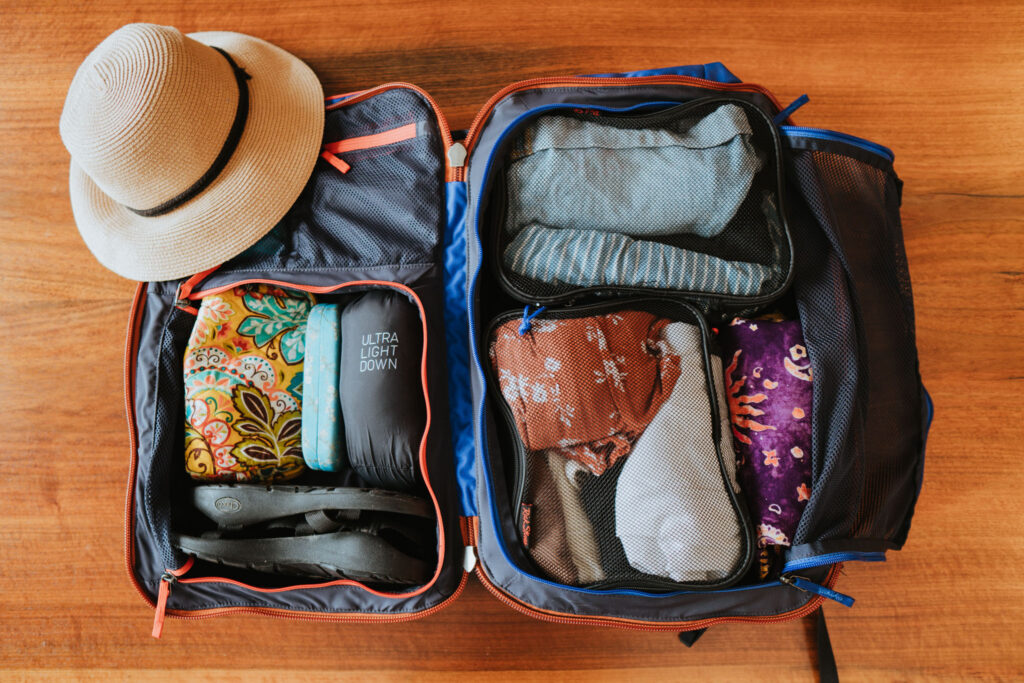
Packing cubes are a game-changer when it comes to light packing. These small, zippered containers help you compartmentalize your clothing, making it easier to stay organized. They also help compress your clothes, allowing you to fit more in a smaller space.
Organize your cubes by category—one for tops, another for pants, and a third for socks and underwear. You can even label each cube for added efficiency. The key to successful packing is keeping things organized and easily accessible, and packing cubes help you achieve that.
3. Roll, Don’t Fold
One of the most effective techniques for saving space is rolling your clothes rather than folding them. This method not only helps you save space but also minimizes wrinkles. By rolling your clothing tightly, you can fit more into your luggage and keep it organized.
For items like t-shirts, pants, and dresses, rolling is the way to go. Items that are more delicate or prone to creasing, such as blouses or dress shirts, may need to be folded, but rolling will still be beneficial for most of your wardrobe.
4. Opt for Multi-Use Items
In the quest for light packing, it’s essential to pack items that serve multiple purposes. For example:
- A sarong or shawl can serve as a beach towel, picnic blanket, or extra layer on chilly evenings.
- A scarf can double as a blanket on flights, a pillow, or an accessory.
- A pair of comfortable, neutral-colored shoes can work for both casual outings and evening dinners.
- A toiletry kit with multi-purpose products (e.g., a shampoo-conditioner combo) reduces the number of bottles you need to carry.
Look for products that combine function and convenience, allowing you to eliminate redundancies in your bag.
5. Streamline Your Toiletries
Toiletries are notorious for taking up unnecessary space in luggage. Instead of packing full-sized bottles, opt for travel-sized containers or buy smaller versions of your favorite products. Many retailers offer toiletry kits designed specifically for travel, containing the essentials like shampoo, conditioner, toothpaste, and soap in compact, leak-proof containers.
Another great trick is to purchase multi-purpose toiletries. A combined shampoo and conditioner, a moisturizer with SPF, or a 2-in-1 razor and shaving cream can save you valuable space and reduce weight.
Essential Gear for Light Packing
To successfully pack light, having the right luggage and accessories is crucial. Here are some key items to consider when choosing your travel gear:
1. Lightweight Luggage
Choose luggage that is lightweight but durable. Hard-shell suitcases are often heavier than soft-sided bags, so opting for a soft, flexible suitcase or duffel bag is a good idea. A small, compact carry-on is often all you need for most trips, especially if you follow the light packing philosophy.
Backpacks or travel duffels are excellent choices for mobility, especially for adventurous travelers who need something that’s easy to carry and navigate. Many backpacks are designed to hold a surprising amount of items while being lightweight and comfortable.
2. Travel Accessories
- Compression Bags: These are perfect for squeezing the air out of bulkier items like jackets or sweaters, saving valuable packing space.
- Travel Pillow: Instead of carrying a bulky travel pillow, consider a compact inflatable version that takes up much less space.
- Universal Adapter: One compact, lightweight adapter for all your devices ensures that you can keep your electronics charged no matter where you are in the world.
- Portable Charger: A small power bank is an essential item for charging devices on the go, and it’s much more compact than a standard charger.
3. Packable Outerwear
Look for jackets or coats that are packable—meaning they can be folded into a small pouch when not in use. These types of jackets are made of lightweight materials, but they still provide excellent protection against wind and rain.
Conclusion: Traveling Light, Traveling Smart
Light packing is more than just a strategy for minimizing the weight of your luggage; it’s about making thoughtful decisions that improve the overall quality of your travel experience. By focusing on quality over quantity, optimizing space with clever techniques like rolling, using packing cubes, and selecting multi-functional items, you can streamline your packing process while ensuring that you are prepared for every aspect of your trip.
Remember, the goal of light packing is not to sacrifice comfort or essentials, but to reduce the burden of unnecessary items. With the right approach, you can travel efficiently, comfortably, and with a greater sense of freedom.
Next time you’re preparing for a trip, keep these light packing tips in mind, and you’ll soon find that less really does mean more—more space, more mobility, and more enjoyable travel experiences.