





For many ski enthusiasts, the thrill of carving down groomed slopes in a ski resort is not enough. As the desire for adventure and adrenaline grows, more and more skiers are turning to the backcountry, seeking greater challenges in snow-covered peaks and remote mountains. Ski mountaineering and snow mountain expeditions have become the next frontier for those looking to push the boundaries of their abilities, combining the thrill of skiing with the challenges of mountaineering.
This article explores why and how ski enthusiasts are drawn to these more demanding forms of skiing. It delves into the equipment, techniques, and physical demands involved in ski mountaineering and snow mountain expeditions, while also examining the risks, rewards, and unforgettable experiences that come with venturing into the wild, uncharted snow-covered terrain.
The Rise of Ski Mountaineering and Snow Mountain Expeditions
1. From Resort Skiing to Adventurous Exploration
The evolution from traditional ski resort activities to the more challenging realm of ski mountaineering and snow mountain expeditions is part of a larger trend in adventure sports. As skiing became more accessible and widespread, enthusiasts began to crave something beyond the confines of ski lifts, groomed slopes, and artificial snow.
Snow mountain expeditions and ski mountaineering provide skiers with the opportunity to explore wild, untouched landscapes, far away from the crowds of the resort. These activities combine skiing, mountaineering, and backcountry exploration, offering a chance to experience nature in its purest form while facing unique physical and mental challenges.
2. What is Ski Mountaineering?
Ski mountaineering, sometimes referred to as “skimo,” is a sport that blends alpine skiing with mountain climbing. It involves ascending mountains on skis, often using specialized equipment such as climbing skins (which help the skis grip the snow) and ski crampons (which provide traction on icy terrain). Once the peak is reached, skiers then descend the mountain, usually through untouched snow in the backcountry.
Unlike resort skiing, which involves riding lifts to the top, ski mountaineering is about self-sufficiency. Skiers must be able to navigate through potentially hazardous terrain, deal with unpredictable weather conditions, and possess the necessary skills to climb the mountain, all while carrying equipment for both ascent and descent.
3. Snow Mountain Expeditions: Conquering Remote Peaks
A snow mountain expedition goes beyond simply skiing; it typically involves an extended journey into remote, challenging, and often pristine mountain regions. These expeditions may take days or weeks and may require the use of a wide range of technical skills such as avalanche awareness, crevasse rescue, and survival tactics.
Unlike ski mountaineering, which focuses on reaching a specific summit, snow mountain expeditions may involve traversing entire ranges or exploring uncharted territories. These expeditions are about connecting with nature, experiencing the raw beauty of remote environments, and testing one’s endurance and mental fortitude.

The Challenges and Skills Required for Ski Mountaineering
1. Physical Demands: Strength, Stamina, and Technical Skill
Ski mountaineering and snow mountain expeditions are physically demanding. Unlike resort skiing, which relies on ski lifts for ascent, ski mountaineering requires climbers to ski uphill, often on steep, rugged terrain. The physical effort is considerable, demanding excellent cardiovascular fitness, muscular endurance, and the ability to handle intense cold, fatigue, and altitude.
Climbers need to build strength in their legs and core to endure the uphill climbs, and a high level of aerobic conditioning is necessary to deal with the extended physical exertion. For long expeditions, skiers must also build endurance to handle the mental and physical strain of days on the mountain.
2. Techniques for the Ascent
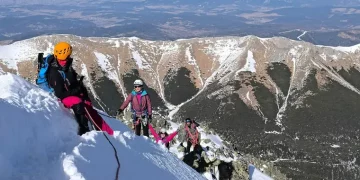
Unlike traditional downhill skiing, which relies on speed and control, ski mountaineering involves climbing with skis on, using techniques such as “skinning” (attaching climbing skins to the base of skis to enable uphill travel). Skiers also rely on ski crampons, ice axes, and sometimes ropes and harnesses, depending on the terrain and the difficulty of the ascent. In more technical conditions, climbers may need to employ techniques from mountaineering, such as ice climbing or rock scrambling.
This variety of skills, including navigating tricky alpine terrain, reading avalanche conditions, and responding to adverse weather, is crucial for a successful expedition. Ski mountaineers also need the ability to quickly assess the stability of snowpack and identify avalanche risks, making avalanche safety training essential.
3. The Descent: A Different Kind of Skiing
After the strenuous ascent, the descent is the most exciting part of ski mountaineering. However, it is also one of the most challenging aspects. Snow conditions can vary dramatically depending on the altitude, time of day, and weather conditions, and ski mountaineers must be prepared to handle everything from deep powder to ice and crusted snow.
Unlike resort skiing, where conditions are largely controlled, the backcountry is a dynamic environment that changes constantly. Skiers must adjust their technique based on the snow conditions and terrain they encounter, sometimes facing steep, exposed slopes, rocky outcroppings, and unexpected obstacles.
4. Equipment: Specialized Gear for Ski Mountaineering
The gear for ski mountaineering differs significantly from traditional ski equipment. While regular skis, boots, and poles are used for the descent, skiers also use specialized equipment for the ascent. Key gear includes:
- Climbing Skins: These are attached to the bottom of skis to provide grip during uphill climbs.
- Avalanche Safety Gear: Essential items include a transceiver, probe, and shovel, which are used in the event of an avalanche.
- Crampons and Ice Axes: For icy terrain, climbers use crampons attached to their ski boots to provide traction, along with ice axes for stability and support during steep ascents.
- Ski Mountaineering Boots: These boots are designed to be lightweight yet durable, with a flexible cuff for uphill travel and a stiff sole for control during descents.
- Ropes and Harnesses: In more technical climbs, climbers may need ropes for safety and harnesses for rappelling or securing themselves on exposed sections.
Safety and Risks of Ski Mountaineering
1. Avalanche Risk: A Constant Threat
One of the most significant dangers in ski mountaineering is the risk of avalanches. Skiers venturing into the backcountry must be well-trained in avalanche safety. This involves knowing how to assess the snowpack, identify unstable slopes, and recognize the signs of potential avalanche danger. Carrying avalanche safety gear, including a beacon, probe, and shovel, is absolutely essential.
Avalanches can occur suddenly and unpredictably, and even experienced mountaineers can find themselves in dangerous situations. Skiers are encouraged to take avalanche safety courses and always check avalanche forecasts before embarking on a backcountry journey.
2. Exposure to Harsh Weather
In snow mountain expeditions, the weather can be one of the most challenging factors to contend with. High-altitude mountains are known for rapidly changing weather conditions, including extreme cold, strong winds, and sudden snowstorms. Skiers must be prepared for such conditions and carry gear designed to withstand freezing temperatures and harsh environments.
Moreover, the physical strain of skiing in such conditions can lead to fatigue, which can impair decision-making and increase the risk of accidents. Proper planning, weather forecasting, and the ability to turn back when necessary are critical elements in ensuring safety.
3. Altitude and Fatigue
At high altitudes, the air pressure decreases, reducing the amount of oxygen available. This can lead to altitude sickness, causing headaches, dizziness, and nausea. Skiers who embark on expeditions at high altitudes must be aware of the symptoms of altitude sickness and take steps to acclimatize properly before ascending to higher elevations.
Additionally, the sheer physical exhaustion from long days of skiing and climbing can take its toll on the body and mind. The ability to manage fatigue and push through mental barriers is as important as physical endurance in these extreme conditions.
The Rewards of Snow Mountain Expeditions and Ski Mountaineering
1. Sense of Accomplishment and Self-Discovery
The challenges of ski mountaineering are not just physical—they are deeply psychological. Climbing a snow-covered peak, navigating remote terrain, and skiing down untouched slopes create a sense of accomplishment that goes beyond the physical act of reaching the summit. For many, these adventures are an opportunity for self-discovery, testing mental limits, and experiencing the ultimate feeling of self-reliance.
Completing a ski mountaineering ascent is a reminder of human potential and resilience. The journey can push climbers to their limits, but it also provides a profound sense of achievement. For some, it’s the feeling of conquering their fears, for others, it’s the pure joy of immersing themselves in the wild, majestic mountains.
2. Immersive Connection with Nature
Unlike resort skiing, which is confined to man-made environments, snow mountain expeditions and ski mountaineering provide an immersive experience in the natural world. These adventures take skiers into untouched, pristine landscapes where they can experience the raw beauty of snow-covered peaks, vast alpine valleys, and rugged terrains that few people ever see.
This connection with nature can lead to a greater appreciation for the environment, as well as a desire to preserve these natural wonders for future generations. Ski mountaineers often report a deep sense of awe and reverence for the mountains, reinforcing the importance of protecting these fragile ecosystems.
Conclusion: Ski Mountaineering as the Ultimate Adventure
For those seeking the ultimate adventure, ski mountaineering and snow mountain expeditions offer more than just a chance to ski in the backcountry—they offer an opportunity to challenge both the body and the mind, to discover new landscapes, and to experience nature in its most unspoiled form. The sport is demanding, complex, and full of risks, but for those who choose to embrace it, the rewards are immeasurable.
Whether scaling remote peaks or skiing across expansive snowy fields, ski mountaineering allows enthusiasts to engage in an extraordinary form of adventure that goes beyond what traditional resort skiing can offer. It’s about more than reaching the summit; it’s about pushing personal boundaries, overcoming challenges, and connecting with nature in the most profound ways.