









Wilderness survival challenges have surged in popularity in recent years, attracting travelers and extreme sports enthusiasts alike. These challenges offer a rare opportunity to immerse oneself in nature, test physical and mental endurance, and confront the raw forces of the environment. With a growing trend of adventure tourism, survival challenges have become an essential part of the modern traveler’s bucket list.
But these experiences are not just about thrill-seeking or escaping into the wild. They serve as an ultimate test of survival skills, requiring participants to adapt to the harshest conditions and push their limits. From remote forests to barren deserts, participants are trained to navigate the natural world, confront danger, and learn critical survival techniques that could save their lives.
This article will delve into the world of wilderness survival challenges, exploring their appeal, the essential skills required, and the life-changing experiences they offer.
1. The Allure of Wilderness Survival Challenges
1.1 A Return to Primitive Roots: The Desire for Self-Sufficiency
In a world dominated by technology and convenience, many people feel a longing to reconnect with the earth and rediscover the primal skills that once ensured human survival. Wilderness survival challenges allow participants to experience life as it might have been centuries ago, before the comforts of modern life. This return to basics is one of the primary reasons why so many travelers and extreme sports enthusiasts find the idea of survival challenges so appealing.
By participating in survival challenges, individuals learn how to rely on their own resourcefulness and ingenuity to overcome nature’s obstacles. Whether it’s building a shelter, starting a fire without matches, foraging for food, or purifying water, these challenges push participants out of their comfort zones and into the wildest corners of the Earth.
1.2 The Thrill of Adventure and Discovery
Beyond the skills learned, survival challenges offer an undeniable sense of adventure. The unpredictability of nature ensures that each challenge is unique, with new obstacles to overcome and new landscapes to explore. The experience of living in the wilderness—often with little more than the bare essentials—can be transformative. It’s not just about surviving, but about discovering one’s own limits, testing endurance, and finding inner strength.
This sense of exploration and discovery appeals to extreme sports enthusiasts, who thrive on the unknown and seek new frontiers to conquer. Wilderness survival challenges offer the perfect blend of excitement, self-discovery, and natural beauty, making them an irresistible pursuit for those who live for adventure.
1.3 Escape from Modern Life: The Quest for Simplicity
Many travelers are drawn to wilderness survival challenges as a way to escape the stresses of modern life. In today’s hyper-connected, fast-paced world, people are often overwhelmed by the demands of work, technology, and social expectations. Wilderness survival offers a reprieve from this, allowing participants to unplug and focus solely on the essential elements of life: food, water, shelter, and safety.
The simplicity of survival challenges is appealing in a world that often feels overly complicated. For many, spending time in nature, away from distractions, offers a much-needed reset and a chance to reconnect with the natural world in its most raw and unrefined form.
2. The Essential Skills for Wilderness Survival
Surviving in the wild requires a wide range of skills that go far beyond basic knowledge. Wilderness survival involves a combination of practical abilities, mental resilience, and adaptability. This section will explore some of the most important skills required for surviving in challenging wilderness environments.
2.1 Building Shelter
The ability to build a shelter is one of the first priorities in any survival situation. Without shelter, individuals are at risk of exposure to the elements, which can lead to hypothermia, heatstroke, or other life-threatening conditions. Whether it’s a makeshift shelter constructed from branches and leaves or a more sophisticated structure using tools, the ability to create a safe, weatherproof shelter is crucial for long-term survival.
In wilderness survival challenges, participants are often asked to build their own shelter using only natural materials or the basic tools provided to them. This skill requires knowledge of how to select the right location, how to gather materials, and how to construct a shelter that will protect against rain, wind, and cold temperatures.
2.2 Fire-Making Techniques
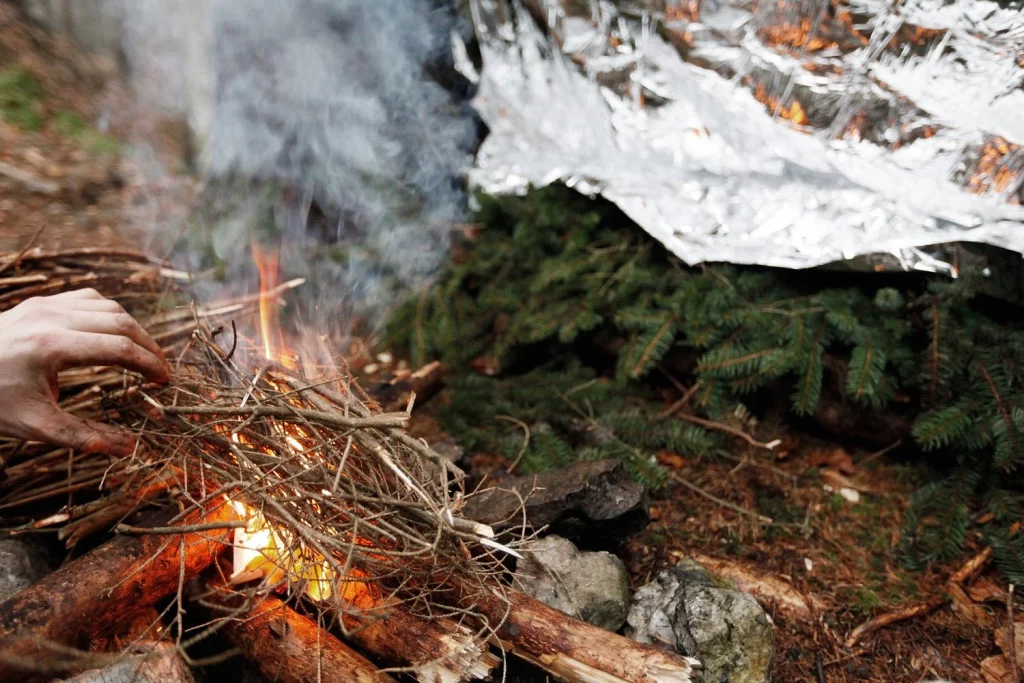
Fire is often referred to as one of humanity’s most important inventions, and for good reason. It provides warmth, protection, a means of cooking food, and a way to purify water. In wilderness survival challenges, participants are often tested on their ability to make fire using primitive techniques, such as friction or flint-and-steel methods.
Starting a fire without modern tools is a skill that requires patience, knowledge, and perseverance. Participants must understand how to select the right tinder, how to build a fire structure that will burn efficiently, and how to sustain a fire over time.
2.3 Foraging and Food Procurement
In the wilderness, food can be scarce, and adventurers must be prepared to forage or hunt for sustenance. Learning how to identify edible plants, insects, and small animals is essential for survival. Many wilderness survival challenges include lessons in plant identification, teaching participants which plants are safe to eat, which are poisonous, and how to prepare food without modern utensils.
Foraging is a skill that requires careful observation and knowledge of the local ecosystem. Participants must also understand how to prepare and cook food safely, which often involves building a fire and using primitive cooking methods such as roasting or boiling.
2.4 Water Sourcing and Purification
Water is one of the most essential elements for survival, but in many wilderness environments, it’s not always easy to find. Streams and rivers may be contaminated, and water sources may be few and far between. Survival challenges teach participants how to find and purify water in the wild, using techniques like filtering, boiling, or using solar stills.
Knowing how to purify water is crucial for long-term survival, as untreated water can carry diseases that could quickly incapacitate an adventurer. In many survival challenges, participants are given the task of finding and purifying water without modern equipment, relying on their skills to stay hydrated.
2.5 Navigation and Orienteering
Navigating through the wilderness requires a solid understanding of both the natural world and navigation tools. In survival challenges, participants must often navigate their way through dense forests, across rivers, or over mountains, relying on maps, compasses, and natural markers to guide them.
Understanding how to read terrain features, follow river currents, and use the position of the sun or stars for navigation are key skills that can mean the difference between safety and getting lost. Orienteering is a skill that requires practice and knowledge, and it’s a vital component of any wilderness survival challenge.
3. The Mental and Psychological Challenges of Wilderness Survival
Surviving in the wilderness is as much a psychological challenge as it is a physical one. In extreme survival situations, adventurers must rely on their mental resilience to stay focused, make sound decisions, and avoid panic.
3.1 Overcoming Fear and Anxiety
Fear is an instinctual response to danger, but it can become a hindrance if not managed properly. In survival situations, anxiety and fear can cloud judgment and lead to poor decision-making. Wilderness survival challenges teach participants how to remain calm and rational, even in stressful or dangerous situations.
By learning how to manage fear, adventurers become better equipped to handle the uncertainties of the wild. This mental fortitude is crucial not only for survival but for the ability to complete a challenge successfully.
3.2 Problem-Solving and Decision-Making
Survival situations are often unpredictable, and adventurers must continuously make decisions to adapt to changing conditions. From choosing a campsite to figuring out how to catch food, every choice made in the wilderness can have a significant impact on survival. The ability to solve problems efficiently and stay focused on the long-term goal of survival is key to success.
3.3 Endurance and Perseverance
Physical endurance is required to endure the tough conditions of the wilderness, but mental endurance is equally important. Participants must be able to push through discomfort, fatigue, and frustration to continue moving forward. This ability to persevere despite obstacles is what separates successful survivalists from those who fail.
Wilderness survival challenges often take place over several days or even weeks, testing participants’ stamina and willpower. The mental strength to endure difficult conditions and continue striving toward survival is a valuable lesson for any adventurer.
4. The Growing Popularity of Wilderness Survival Challenges
4.1 Survival Reality Shows and Media Influence
Wilderness survival challenges have also gained widespread attention through popular media, especially reality TV shows. Programs such as Survivor, Man vs. Wild, and Naked and Afraid have helped to popularize survivalism by showcasing the intensity and excitement of surviving in the wild. These shows have sparked a growing interest in wilderness survival, prompting more individuals to seek out hands-on experiences in the wild.
While these shows often dramatize certain aspects of survival, they have nonetheless fueled public interest in survival training and expeditions.
4.2 Survival Tourism: A Growing Trend
With the rise of adventure tourism, wilderness survival challenges have become a sought-after experience for travelers who want more than just a traditional vacation. Survival tourism offers a chance to disconnect from the modern world and test oneself in the wild. Many companies now offer survival courses and expeditions in remote locations, allowing travelers to immerse themselves in nature and develop valuable survival skills.
These survival challenges often attract people looking for a more meaningful travel experience, one that provides not only adventure but also personal growth and self-discovery.
Conclusion: The Ultimate Test of Human Endurance
Wilderness survival challenges offer one of the most intense and rewarding forms of adventure. They test physical strength, mental toughness, and resourcefulness, pushing adventurers to the edge of their limits. For those seeking a true adventure, a chance to reconnect with nature, and the opportunity to push themselves beyond what they thought possible, wilderness survival challenges provide a unique and transformative experience.
As more and more travelers and extreme sports enthusiasts turn to the wild for their next adventure, the popularity of these survival challenges will continue to grow, offering even more opportunities to explore, learn, and thrive in the great outdoors.