







The Running of the Bulls (Encierro) is one of Spain’s most famous and thrilling cultural traditions, attracting tens of thousands of spectators each year. Held annually during the San Fermín Festival in Pamplona, the event has become a symbol of Spanish heritage and adrenaline-pumping excitement. This ancient practice, which involves running in front of a herd of bulls through the narrow streets of Pamplona, is both exhilarating and controversial, blending traditional festivities with a deep connection to Spain’s agricultural roots.
This article will explore the origins, significance, and global allure of the Running of the Bulls, as well as the controversies surrounding the event. From its history as part of the San Fermín Festival to its present-day status as an iconic global spectacle, we will delve into the cultural, social, and ethical aspects of this high-octane tradition.
Chapter 1: The History and Origins of the Running of the Bulls
1.1 Early Beginnings of the Bull Runs
The practice of running with bulls dates back to medieval times in Spain. Its roots can be traced to the 13th century, during the era when bullfighting and bull-related festivals began to flourish. However, the Running of the Bulls as we know it today has its origins in the northern region of Navarre, where bull-related festivities were often held as part of religious or agricultural celebrations.
Initially, the bulls were driven through the streets to the local bullring, where they would later be fought by professional bullfighters. The practice of running in front of the bulls was born out of a necessity: young men would often run alongside the bulls to help herd them through the narrow streets, ensuring that they arrived safely at the ring.
The first documented instance of the Running of the Bulls in Pamplona was in 1591. The tradition evolved over time, with the streets of Pamplona becoming the focal point for the event, attracting both locals and tourists.
1.2 The San Fermín Festival: Birth of the Modern Event
The Running of the Bulls became an integral part of the Fiesta de San Fermín, which is held annually from July 6 to July 14 in Pamplona. The festival, which honors San Fermín, the patron saint of Pamplona, is a celebration of both religious and cultural significance.
The origins of the San Fermín Festival can be traced to the 16th century, when the festival’s religious observances began to incorporate bull-related events. By the late 19th century, the Running of the Bulls became a central feature of the festival, drawing attention from both locals and international visitors.
Ernest Hemingway, the famous American writer, played a significant role in popularizing the event in the 20th century through his novel, “The Sun Also Rises” (1926), in which he vividly described the San Fermín Festival and the excitement of running with the bulls. Hemingway’s portrayal of the festival helped to solidify its status as an international spectacle, attracting tourists and thrill-seekers from all over the world.
Chapter 2: The Festival of San Fermín
2.1 A City Transformed for the Fiesta
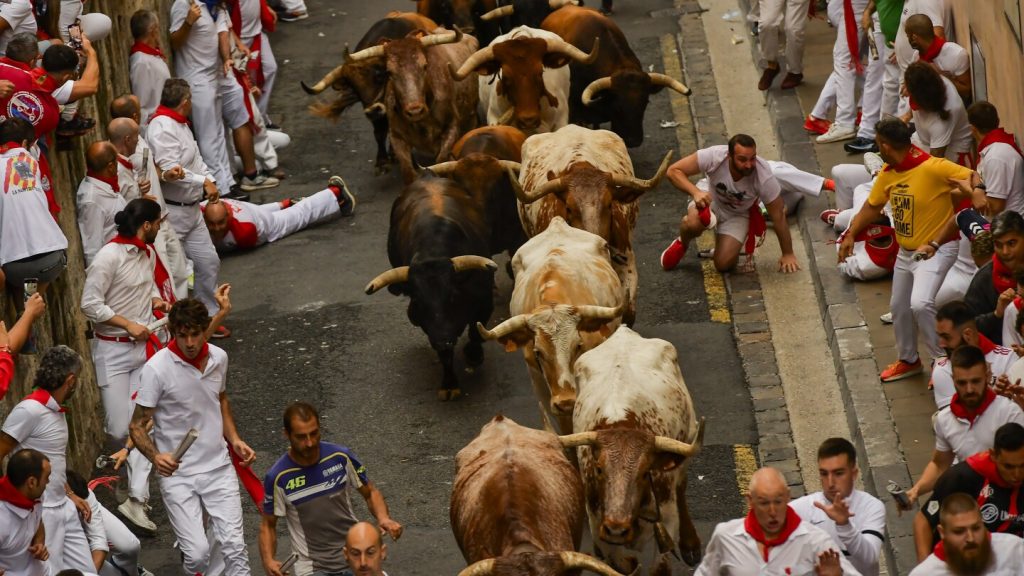
During the San Fermín Festival, the entire city of Pamplona transforms into a vibrant celebration of Spanish culture. The streets are lined with red and white decorations, as participants wear white outfits with red sashes and bandanas, a tradition that symbolizes both the blood of the bulls and the passion of the festival.
The event is marked by an intense schedule of religious ceremonies, processions, music, dancing, and, of course, the exhilarating bull runs.
The festival begins with the famous Chupinazo: a rocket is launched from the city hall at noon on July 6, signaling the start of the festivities. This event is followed by the Running of the Bulls, which takes place every morning from July 7 to July 14, leading up to the feast day of San Fermín.
2.2 The Running of the Bulls: The Heart of the Festival
The Running of the Bulls takes place each morning at 8 AM and lasts for about three to four minutes. The bulls are released from a holding pen and are guided through the narrow, cobbled streets of Pamplona toward the Plaza de Toros, the city’s bullring.
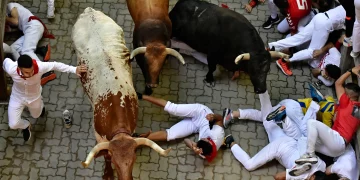
The route is approximately 800 meters long and winds through several narrow streets, creating an intense and often perilous experience for participants. The bulls, typically six in number, are accompanied by several hundred runners who try to outrun the animals while avoiding being gored. Though the event is a thrilling test of speed and bravery, it is also incredibly dangerous, with injuries and fatalities occurring each year.
2.3 Other Key Events in the San Fermín Festival
In addition to the Running of the Bulls, the San Fermín Festival features several other traditional events that showcase Spain’s rich cultural heritage. These include:
- Bullfights: After the morning run, bullfights take place in the Plaza de Toros, where matadors face off against the bulls in a dramatic and symbolic confrontation.
- Dances and Music: The streets of Pamplona are filled with music, traditional folk dances, and performances, celebrating Spanish culture and regional customs.
- Fireworks and Parades: The festival also includes grand parades, fireworks displays, and religious ceremonies, culminating in the “Pobre de Mí” song on July 14, marking the end of the festival.
The festival draws large crowds, with over a million people from around the world visiting Pamplona each year to witness the events.
Chapter 3: The Thrills and Dangers of the Bull Run
3.1 The Risks Involved
While the Running of the Bulls is undeniably thrilling, it is also fraught with danger. Every year, participants risk serious injury or death from the bulls or from falls and accidents. The bulls are large, powerful animals, and despite their relative docility in the streets, they are still wild creatures with unpredictable behavior.
According to records, the San Fermín Festival has resulted in dozens of fatalities and thousands of injuries since its inception. The bulls run at high speeds, and runners who fall or become trapped between the animals face significant risk. In 2019, there were 41 injuries during the run, though no fatalities were recorded.
For this reason, many safety measures have been implemented to help protect participants. These include requiring runners to wear specific clothing (white with a red scarf and sash), ensuring that the streets are cleared before the run begins, and having medical teams stationed along the route to attend to any injuries.
3.2 The Participants: Who Runs with the Bulls?
The participants in the Running of the Bulls come from all walks of life, including locals, tourists, and seasoned runners who return year after year. While the event is open to anyone willing to take the risk, it’s recommended that only those with previous experience or sufficient physical fitness attempt the run.
Before participating, runners are encouraged to familiarize themselves with the route and to heed all safety guidelines. In recent years, the local government has taken additional steps to ensure that participants understand the risks involved and are prepared for the experience.
3.3 The Ethical Debate: Animal Rights and Bullfighting
The Running of the Bulls is not without its critics. Animal rights activists have long argued that the event, along with the broader bullfighting tradition, is cruel and inhumane. The bulls used in the run are often the same bulls that will later be fought in the bullring, where they face a much more grueling and fatal fate.
Critics argue that the treatment of animals in events like the Running of the Bulls promotes unnecessary violence and suffering, and they call for an end to the practice. In recent years, there has been increasing pressure to reform or abolish bullfighting and related events, leading to debates within Spain and beyond.
Proponents of the Running of the Bulls, however, argue that it is a cultural tradition that has deep historical roots and that the event itself does not inherently promote cruelty to animals. Many supporters also point to the careful management of the bulls during the run and the fact that the animals are not harmed during the event itself.
Chapter 4: The Global Influence of the Running of the Bulls
4.1 International Recognition and Tourism
The Running of the Bulls has gained worldwide recognition as one of the most thrilling and unique cultural events. Thanks to the influence of authors like Ernest Hemingway and the extensive media coverage, the event has attracted tourists and thrill-seekers from all over the globe. Pamplona sees an influx of international visitors each year, with over 1 million spectators participating in the San Fermín Festival.
As the event continues to grow in popularity, many people come not only for the thrill of the bull runs but also to experience the rich cultural traditions and history that Pamplona has to offer.
4.2 The Commercialization of the Tradition
With the increasing global popularity of the Running of the Bulls, the event has become a significant economic driver for Pamplona and Spain. Hotels, restaurants, and tour operators benefit greatly from the influx of international visitors, and the festival has become a major tourism attraction. However, this commercialization has sparked a debate about whether the festival is losing its authenticity and cultural significance in favor of profit.
Conclusion: The Legacy of the Running of the Bulls
The Running of the Bulls remains one of Spain’s most iconic and controversial cultural traditions. It represents the passion and adrenaline of Spanish culture while raising questions about the treatment of animals and the balance between tradition and modern ethical concerns. Whether viewed as a thrilling spectacle or a barbaric practice, the Running of the Bulls continues to be an integral part of Spain’s cultural heritage, drawing attention to the vibrant and dynamic history of the San Fermín Festival.
As the debate surrounding its future continues, the Running of the Bulls will likely remain a powerful symbol of both Spanish pride and the complex relationship between humans and animals.