








Travel has long been regarded as a transformative experience—an adventure that opens up new vistas, both geographically and spiritually. Whether you are trekking through a dense jungle, hiking to the summit of a mountain, or navigating an unfamiliar city, the act of traveling often brings you face to face with both the wonders and the challenges of the world.
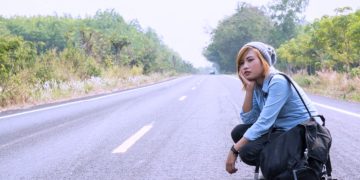
One of the most profound moments that often arises in travel is when travelers find themselves unexpectedly lost, disoriented, or stuck in a difficult situation. It’s in these moments of uncertainty, when the journey takes an unforeseen turn, that travelers are often forced to pause and reassess their situation. Interestingly, these forced pauses—whether due to getting lost on a remote trail, being delayed by unforeseen circumstances, or encountering sudden adversity—tend to be the very moments when travelers find clarity, inner peace, and a deeper understanding of themselves.
In this article, we will explore how moments of difficulty during travel—those when travelers are lost or face unexpected hardship—can serve as opportunities for personal growth, reflection, and rediscovery. Through examining real-life examples, psychological insights, and the transformative power of solitude, we will uncover how the experience of being “lost” can lead to profound self-awareness and inner peace.
The Psychology of Being Lost
The Fear and Anxiety of Losing Control
When travelers find themselves lost—whether physically or metaphorically—the first reaction is often one of fear. It’s a natural, instinctive response. In unfamiliar environments, uncertainty amplifies the fear of the unknown. Travelers who get lost on a trail in the mountains, in a foreign city, or even in their own thoughts can feel an overwhelming sense of panic. The mind races, emotions heighten, and the urge to regain control becomes paramount.
From a psychological standpoint, this reaction is tied to the human need for control. When we lose our bearings, both physically and emotionally, it triggers a deep sense of insecurity. We are creatures of habit and predictability, and when we stray from the familiar, our brains experience stress. According to research in behavioral psychology, the feeling of being lost or out of control disrupts our cognitive function, leading to heightened anxiety and a sense of vulnerability.
However, this heightened state of anxiety is often short-lived. Once the initial shock wears off, the body begins to adjust to the situation, and the mind shifts from panic to problem-solving. It is in this moment of transition—when the panic begins to subside and the journey becomes more introspective—that travelers begin to experience a shift in perspective.
Finding Clarity Through Disorientation
Interestingly, when travelers are forced to stop and reorient themselves, they often experience an unexpected moment of clarity. This is not simply about finding the correct path, but about reconnecting with themselves. The absence of external distractions—the lack of GPS, a map, or a clear direction—forces travelers to turn inward. In this stillness, the mind quiets, and the pace slows down.
This can lead to a powerful sense of presence. Travelers who are forced to pause often find themselves reconnecting with their surroundings, sensing things they would have otherwise missed—whether it’s the rustling of the wind in the trees, the sound of birdsong, or the distant hum of a river. These moments of silence and solitude provide an opportunity for travelers to reconnect with the essence of their journey: not just the destination, but the experience of being in the moment.
The Role of Solitude in Self-Discovery
Solitude, often a byproduct of being lost or delayed in travel, is another crucial aspect of this self-reflection process. In today’s fast-paced world, most people are constantly surrounded by distractions—whether it’s technology, work pressures, or social obligations. Traveling, especially in remote or less-developed areas, can strip away these external noise sources, providing travelers with the opportunity to experience deep solitude.
While solitude can sometimes be uncomfortable, it is also incredibly powerful for self-reflection. In the absence of distractions, travelers are left to confront their thoughts, their fears, and their desires. The physical act of being lost, or the emotional experience of facing an unexpected challenge, can become a mirror for one’s inner landscape.
The Benefits of Embracing the Moment
There is an undeniable therapeutic aspect to being lost—an opportunity to experience a sense of freedom and release. In these moments, travelers often stop focusing on external goals and destinations, shifting their attention to the present moment. This kind of mindfulness is linked to psychological well-being. Studies have shown that practicing mindfulness, whether through meditation, reflection, or simply being in the moment, can reduce stress, improve emotional regulation, and enhance overall life satisfaction.
Rediscovering the Journey: A Path to Inner Peace
When travelers are forced to pause, whether they are lost in the wilderness or stuck in a city due to unforeseen circumstances, it is in these moments of stillness that they often find a deeper sense of peace. Being disconnected from the hustle of everyday life, without a set agenda or deadlines, allows the traveler to explore their inner world. Here, inner peace is not something to be sought after, but something to be experienced—something that arises when one learns to embrace the uncertainty and find contentment in the journey itself.

The Personal Transformation That Occurs When Lost
Being lost, in a metaphorical sense, is also a powerful catalyst for personal transformation. It serves as an opportunity to confront limiting beliefs, face fears, and challenge one’s preconceived notions about life and the world. When travelers face hardship, they are often pushed beyond their comfort zones. Whether it is a difficult climb, getting lost in an unfamiliar city, or having to navigate unforeseen difficulties, these challenges force travelers to trust themselves more, to develop resilience, and to adapt to changing circumstances.
Letting Go of Expectations
One of the most profound aspects of being lost or delayed during travel is the way it challenges our expectations. In our everyday lives, we are conditioned to follow a linear path: we set goals, make plans, and expect things to unfold in a certain way. Travel, however, has a way of disrupting this narrative. Things go wrong, plans change, and unforeseen obstacles arise. These moments of unpredictability teach travelers to let go of rigid expectations and learn to embrace uncertainty.
This ability to “go with the flow” is not only crucial for navigating the challenges of travel, but also for personal growth. It encourages flexibility, resilience, and patience. In the face of adversity, travelers often learn that the beauty of the journey is not in the destination, but in how they navigate the unexpected twists and turns along the way.
Finding the “Lost” Parts of Yourself
On a deeper, more introspective level, getting lost can also be a metaphor for the search for self. Just as one physically loses their way in a foreign landscape, travelers may find that they’ve lost touch with certain aspects of themselves—whether it’s their sense of purpose, their passions, or their sense of inner peace. The act of being “lost” then becomes an opportunity to rediscover these parts of themselves.
Much like the traveler who takes a moment to pause and reorient themselves, we often need to step away from the busyness of life to reconnect with who we truly are. Travel offers an ideal space for this. It provides the freedom and the solitude needed to take a step back from the noise of everyday life and reconnect with our core values, desires, and goals.
Real-Life Stories of Finding Peace When Lost
The Story of Sarah: Getting Lost in the Himalayas
Sarah, a solo traveler from the UK, had always dreamed of trekking in the Himalayas. She set off on a solo trek to Everest Base Camp, with a detailed map and a sense of excitement for the adventure ahead. However, after a long day of trekking, she missed a crucial turn in the trail, and soon found herself wandering through the wilderness, unsure of her location. Panic set in as night began to fall, and Sarah realized she was far from any village or clear path.
In the midst of the panic, Sarah made the conscious decision to stop, sit down, and breathe deeply. She found a small, flat area to sit and, for the first time that day, allowed herself to experience the full weight of her situation. It was in this quiet moment of reflection that Sarah began to reassess her emotions—fear, anxiety, and frustration slowly gave way to a quiet sense of acceptance. She realized that the adventure had taken an unexpected turn, but it was still an adventure nonetheless. After some time, she was able to retrace her steps with newfound clarity and eventually found her way back to the trail.
The experience, while frightening, transformed Sarah. She described the moment of solitude as one of the most transformative of her journey—where she realized how much she had been rushing through life and how much she had learned to slow down.
The Story of John: A Delay in Morocco
John, a seasoned traveler, found himself stuck in a remote Moroccan village after a train breakdown delayed his travel plans. Rather than becoming frustrated, he decided to embrace the unplanned delay. With no clear agenda, John spent the next few days walking through the village, talking to locals, and immersing himself in the simple, slow pace of life there.
Through this experience, John gained a new perspective on his own life. The forced pause in his journey allowed him to reflect on his career, relationships, and personal ambitions. He found inner peace in this unstructured time, learning that sometimes the best moments of travel occur when you are least expecting them.
Conclusion: The Power of Pause
When travelers are lost or forced to pause due to unforeseen hardships, it can be a difficult and disorienting experience. Yet, it is in these very moments of uncertainty that profound personal transformation occurs. The opportunity to reconnect with the present moment, embrace solitude, let go of expectations, and rediscover one’s sense of inner peace is one of the greatest gifts that travel can offer.
Rather than seeing moments of being “lost” as failures or setbacks, travelers can choose to view them as pivotal opportunities for growth. After all, sometimes the most meaningful discoveries happen when we find ourselves off the beaten path.