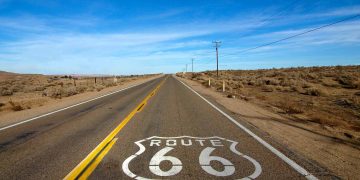









The United States is a country defined by its diverse landscapes, iconic cities, and historical landmarks. One of the most legendary ways to experience all that America has to offer is by embarking on a road trip along Route 66, one of the most famous highways in the world. Known as the “Main Street of America”, Route 66 stretches from Chicago, Illinois, to Santa Monica, California, covering nearly 2,500 miles and passing through eight states, diverse terrains, and a multitude of fascinating attractions.
A Route 66 road trip offers much more than just scenic views—it’s an exploration of history, culture, and the spirit of adventure. For those who love long-distance travel, there are few journeys more iconic and enriching than traversing this historic route. In this article, we will explore the history, attractions, and tips for navigating the Route 66 road trip, making it the ultimate guide for those planning to embark on this classic American journey.
1. History of Route 66: America’s Mother Road
Route 66 was established on November 11, 1926, as part of the U.S. Highway System. Initially, it ran from Chicago, Illinois, through Missouri, Kansas, Oklahoma, Texas, New Mexico, Arizona, and finally to Santa Monica, California. The highway quickly became an essential route for travelers, linking small towns and big cities across the American Midwest and Southwest.
Route 66 became particularly famous during the Great Depression of the 1930s, when thousands of people, mostly from the Dust Bowl states, traveled west in search of better opportunities in California. These displaced families, depicted in literature such as John Steinbeck’s The Grapes of Wrath, gave the highway a strong cultural significance and earned it the nickname “The Mother Road.”
By the mid-20th century, Route 66 had become a symbol of the American road trip, attracting travelers from all over the country and the world. With the development of modern highways and the eventual decommissioning of Route 66 in 1985, many of its original attractions and roadside diners began to fade into obscurity. However, a renewed interest in nostalgic travel has led to a resurgence of enthusiasm for the Mother Road, and Route 66 continues to capture the imagination of road trip enthusiasts.
2. The Route 66 Road Trip: An Overview of the Journey
A road trip along Route 66 offers a unique blend of classic Americana, history, culture, and breathtaking scenery. The highway’s route covers a range of environments, from bustling cities and small towns to vast deserts, prairies, and the natural beauty of the American West.
2.1 The Starting Point: Chicago, Illinois
The journey begins in Chicago, one of the most vibrant and culturally rich cities in the U.S. Known for its iconic architecture, art scene, and diverse food culture, Chicago provides a perfect introduction to the Route 66 experience. Before hitting the open road, visitors can explore some of the city’s most famous landmarks, including the Willis Tower, Millennium Park, and Navy Pier.
From Chicago, Route 66 heads southwest, passing through suburban landscapes before moving into the heart of Illinois. As travelers head toward the horizon, the flat farmlands of the Midwest provide an open and expansive feel to the journey.
2.2 The Midwest: Illinois to Missouri
As you continue through Illinois and into Missouri, the highway takes you through picturesque small towns and historic sites. In Illinois, Lincoln’s Home National Historic Site in Springfield offers a glimpse into the life of one of America’s most iconic presidents. Missouri introduces travelers to St. Louis, where the Gateway Arch stands as a monument to westward expansion.
Route 66 attractions in Missouri include roadside diners, quirky motels, and the Meramec Caverns, a famous cave system that was once a hideout for Jesse James. The state of Missouri also offers travelers the chance to visit the Route 66 State Park, which celebrates the history of the highway.
2.3 The Great Plains: Kansas and Oklahoma
The next stretch of Route 66 takes you through the Great Plains, where wide-open spaces and vast skies await. In Kansas, the highway spans just over 13 miles, but it includes several must-see landmarks, such as the Galena Mining & Historical Museum and the historic Rainbow Bridge.
Once you reach Oklahoma, Route 66 becomes a deep dive into the heart of the American Southwest. The state is known for its cowboy culture, Native American history, and iconic Route 66 sites. Tulsa and Oklahoma City are two major urban hubs, where visitors can experience the city’s history and vibrant art scenes. In Clinton, Oklahoma, the Route 66 Museum offers a comprehensive look at the highway’s significance.
2.4 The Wild West: Texas, New Mexico, and Arizona
As Route 66 progresses into Texas, travelers are welcomed by wide desert plains, historic towns, and the essence of the American frontier. The Cadillac Ranch in Amarillo, Texas, is a popular photo spot where visitors can spray-paint classic Cadillac cars buried nose-first in the ground, a quirky tribute to Americana.
Continuing west, New Mexico introduces travelers to the unique blend of Native American and Spanish cultures. In Santa Fe, travelers can enjoy a rich history, adobe architecture, and Southwestern cuisine. Albuquerque and Gallup offer their own historic charm, with neon signs, diners, and motels that have been staples of the Route 66 experience since the mid-20th century.
In Arizona, Route 66 winds through the high desert, offering some of the most stunning and dramatic landscapes on the entire route. Famous landmarks like Meteor Crater, Petrified Forest National Park, and the town of Williams—the gateway to the Grand Canyon—give travelers a true sense of the wild and rugged beauty of the American West.
2.5 The End of the Road: Santa Monica, California
The journey concludes in Santa Monica, California, where Route 66 officially ends at the iconic Santa Monica Pier. Known for its beautiful beaches, lively boardwalk, and historic pier, Santa Monica serves as a fitting end to a road trip steeped in history and adventure. Visitors can take a ride on the Ferris wheel, stroll down Third Street Promenade, or relax on the beach to reflect on the incredible journey.

3. Major Attractions Along Route 66
While the entire Route 66 experience is defined by its unique charm and historical significance, several iconic attractions make the road trip even more memorable. Here are some of the must-visit stops along the way:
3.1 The Gateway Arch (St. Louis, Missouri)
One of the most recognizable landmarks in the U.S., the Gateway Arch in St. Louis represents the westward expansion of the American frontier. Visitors can ride to the top for stunning views of the Mississippi River and the city below. It’s an essential stop for anyone taking the Route 66 journey.
3.2 Cadillac Ranch (Amarillo, Texas)
An artistic installation that has become a symbol of Route 66, Cadillac Ranch features ten old Cadillac cars buried nose-first in the ground, allowing visitors to leave their own mark by spray-painting the cars.
3.3 The Blue Whale (Catoosa, Oklahoma)
This giant concrete whale has been a popular roadside attraction since the 1970s. Originally built as a swimming hole and picnic area, the Blue Whale is now a quirky stop where visitors can take photos and marvel at the unique roadside sculpture.
3.4 Petrified Forest National Park (Arizona)
Known for its ancient petrified wood, Petrified Forest National Park is a must-see for nature lovers. The colorful petrified logs scattered across the landscape offer a glimpse into Earth’s distant past.
3.5 Santa Monica Pier (Santa Monica, California)
The final destination of Route 66, the Santa Monica Pier is home to an amusement park, aquarium, and family-friendly restaurants. It’s a great place to relax after completing this iconic journey and soak in the sights and sounds of Southern California.
4. Tips for a Successful Route 66 Road Trip
Embarking on a Route 66 road trip requires preparation and planning. Here are some essential tips to ensure you get the most out of this classic American adventure:
4.1 Plan Your Route and Stops
While Route 66 is well-marked, it’s important to plan your journey in advance. Decide whether you want to take the trip in one go or break it up into sections, as there is plenty to see along the way. Be sure to check out attractions, motels, and diners that are popular with fellow travelers.
4.2 Pack for All Seasons
Route 66 crosses diverse terrains, so be prepared for a range of weather conditions. In the desert, temperatures can soar in the summer, while in the Midwest and West, it can get cold in the evenings. Make sure to bring clothes for different climates and pack plenty of water for desert stretches.
4.3 Take Your Time
Route 66 is not a race—it’s a journey. Allow yourself the time to stop at quirky roadside attractions, chat with locals, and truly experience the charm of the small towns and communities along the route. The slower you go, the more you’ll appreciate the history and beauty of the road.
4.4 Ensure Your Car is Ready
Since the journey spans a vast distance, it’s important to make sure your vehicle is in good condition. Check the tires, oil, and fluids, and bring along an emergency kit in case you encounter any issues on the road.
Conclusion
A Route 66 road trip is more than just a journey across the American heartland; it’s an immersion into history, culture, and the timeless spirit of adventure. From the bustling streets of Chicago to the serene beaches of Santa Monica, Route 66 offers a one-of-a-kind road trip experience that every traveler should experience at least once in their lifetime.
With its nostalgic charm, iconic landmarks, and diverse landscapes, Route 66 stands as a testament to America’s rich cultural tapestry. Whether you’re a history buff, a photography enthusiast, or just someone in search of a unique adventure, the “Main Street of America” is the ultimate American road trip. Embrace the open road, explore the local attractions, and enjoy the beauty and history of this legendary highway.