









The rapid evolution of artificial intelligence (AI) and machine learning has led to the development of technologies that are reshaping the way humans interact with the world. Among the most significant of these innovations are voice assistants and smart translation tools, which have made communication more seamless, personalized, and accessible than ever before. These technologies are revolutionizing not only how individuals manage their daily tasks but also how they interact across language barriers and cultures.
Voice assistants like Apple’s Siri, Google Assistant, Amazon’s Alexa, and Microsoft’s Cortana have transformed the way we engage with devices, offering hands-free control and personalized assistance. Smart translation tools such as Google Translate, DeepL, and Microsoft Translator have bridged the language gap, enabling real-time, accurate translations in multiple languages. Together, these technologies are paving the way for a future where communication barriers are minimal, and technology is deeply integrated into our personal and professional lives.
This article explores the evolution, functionality, applications, and challenges of voice assistants and smart translation tools, offering insights into how they have transformed the way we communicate, both in everyday settings and across global platforms. We will delve into their technical foundations, their impact on various industries, and the potential they hold for the future of communication.
1. The Rise of Voice Assistants
1.1 Defining Voice Assistants
Voice assistants are software systems designed to perform tasks or answer questions based on voice commands. Using natural language processing (NLP) and speech recognition technologies, voice assistants interpret spoken input, understand the user’s intent, and provide responses. Over time, these systems have evolved to perform a vast array of tasks, from setting reminders and checking the weather to managing smart home devices and facilitating hands-free communication.
Initially introduced as simple tools for mobile phones, voice assistants have rapidly expanded their capabilities and applications, becoming integrated into a range of devices such as smartphones, smart speakers, tablets, and even vehicles. Their ability to process voice commands accurately and perform complex tasks has made them indispensable in the modern digital landscape.
1.2 The Evolution of Voice Assistants
The first significant breakthrough in voice assistant technology came with Apple’s Siri, launched in 2011. Siri allowed users to send texts, set alarms, check the weather, and perform a range of other tasks through simple voice commands. This was a major step forward in making technology more accessible and user-friendly, as it eliminated the need for manual input on devices.
Following Siri’s success, Google Assistant (2016) and Amazon Alexa (2014) further advanced voice assistant technology by offering more sophisticated features. Google Assistant, backed by Google’s vast search database, excelled at answering complex queries, while Alexa gained popularity for its integration with a variety of smart home devices, making it a central hub for home automation.
Key Milestones:
- 2011: Launch of Siri by Apple.
- 2014: Amazon releases Alexa, further establishing voice assistant capabilities in the home.
- 2016: Google introduces Google Assistant, refining voice recognition and contextual understanding.
- 2019: Launch of Microsoft’s Cortana as an enterprise-focused voice assistant.
1.3 How Do Voice Assistants Work?
At their core, voice assistants rely on three fundamental technologies: speech recognition, natural language processing (NLP), and machine learning.
Speech Recognition
The first step in voice interaction is converting spoken language into text. Speech recognition technology analyzes the user’s voice and transcribes it into written text. Early voice recognition systems could only handle simple commands, but modern systems are far more sophisticated. They can identify different accents, understand colloquial language, and even work in noisy environments.
Natural Language Processing (NLP)
Once the speech is converted into text, NLP algorithms come into play. NLP helps the assistant understand the meaning behind the words, not just the literal translation. This allows the assistant to process complex sentences and determine intent. For example, a command like “Turn off the kitchen lights” involves not just recognizing the words “turn,” “off,” and “lights,” but also understanding that “kitchen” refers to a specific location in the home.
Machine Learning
Voice assistants improve over time through machine learning. By analyzing previous interactions, voice assistants can better predict user preferences, refine their responses, and even learn new tasks. The more data the system collects, the better it becomes at anticipating user needs, adapting to individual speech patterns, and offering personalized suggestions.
1.4 Applications of Voice Assistants
Voice assistants are now embedded in a wide variety of devices, offering both personal and professional utility. Here are some of the key areas where voice assistants are making an impact:
- Personal Assistance: Voice assistants manage tasks such as setting alarms, sending messages, scheduling meetings, and providing reminders. They help streamline daily routines and keep users organized.
- Smart Home Control: Integration with IoT (Internet of Things) devices has made voice assistants central to managing smart homes. Users can control lights, thermostats, security systems, and more, simply by issuing commands.
- Entertainment and Media: With voice assistants, users can play music, stream podcasts, listen to audiobooks, or control video content hands-free. These assistants work with services like Spotify, Netflix, and YouTube.
- Business and Productivity: In the workplace, voice assistants improve productivity by managing emails, setting up meetings, and even providing real-time translations for international teams. Virtual assistants like Microsoft Cortana are especially useful in enterprise environments.
- Accessibility: Voice assistants have proven to be game-changers for individuals with disabilities, allowing them to control devices and access information without the need for traditional input methods like typing or touchscreen navigation.
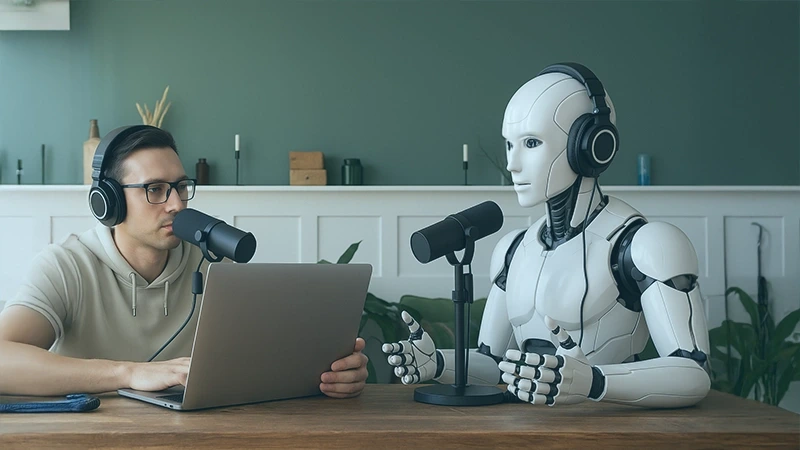
2. The Evolution of Smart Translation
2.1 The Need for Smart Translation
The rise of globalization and digital communication has increased the need for real-time translation. Whether for business, travel, or educational purposes, the ability to communicate seamlessly across languages has become essential. Traditional translation methods, such as human translators or phrasebooks, are often slow, costly, and prone to errors. AI-powered translation tools offer a faster, more efficient alternative that is accessible to anyone with a smartphone or internet connection.
2.2 AI-Powered Translation: A Leap Forward
In the past, translation software relied on simple rule-based systems that translated words and phrases without understanding the context. This often resulted in awkward or inaccurate translations. With the advent of neural machine translation (NMT) and deep learning, smart translation tools now produce more natural, contextually accurate translations by analyzing entire sentences rather than just individual words.
Neural Machine Translation (NMT)
NMT uses artificial neural networks to process entire sentences in context, rather than translating word-by-word. This technology improves the accuracy of translations, especially when dealing with complex sentence structures and idiomatic expressions. By learning from large datasets of text, NMT systems refine their understanding of grammar, syntax, and meaning, producing more fluent translations.
Real-Time Translation Tools
Modern translation tools, like Google Translate, DeepL, and Microsoft Translator, now support real-time, spoken translations. These tools leverage speech recognition and text-to-speech technologies to provide instantaneous communication between speakers of different languages.
- Google Translate: Initially launched as a text-based tool, Google Translate has evolved into a comprehensive translation service that supports over 100 languages and offers real-time translation for both speech and text. It uses NMT to provide more accurate and context-aware translations.
- DeepL: Known for its highly accurate translations, DeepL is an AI-powered translation service that specializes in fewer languages but provides some of the most natural-sounding translations. It uses a proprietary neural network architecture that is particularly effective in translating complex European languages.
- Microsoft Translator: Integrated with a range of Microsoft products like Word, Excel, and Skype, this tool provides real-time translation for both text and voice, supporting over 70 languages.
2.3 Applications of Smart Translation
Smart translation has a wide range of applications in today’s interconnected world. Here are some of the key areas where these tools are making a difference:
- Travel and Tourism: Real-time translation has made international travel more accessible and less stressful. With smartphone apps, travelers can instantly translate signs, menus, and even have conversations with locals in different languages.
- Business and Globalization: Businesses operating in multiple countries now rely on translation tools to communicate with customers, partners, and employees across language barriers. Smart translation has made global collaboration easier and more efficient, facilitating international meetings and negotiations.
- Education: Language learning has been revolutionized by AI-powered translation tools. Students can now access educational materials in different languages, making it easier to acquire knowledge from around the world.
- Social Media and Content Creation: Social media platforms are increasingly using smart translation tools to break down language barriers, allowing users to interact across borders without language limitations. Content creators can use translation services to reach global audiences more effectively.
2.4 Challenges of Smart Translation
While smart translation tools have made significant strides, they are not without limitations. There are still challenges that developers must address to improve the accuracy and usability of these systems:
- Contextual Accuracy: Machine translation can struggle with complex idiomatic expressions, cultural nuances, and domain-specific language. While translations have become more accurate over time, some subtle meanings may still be lost in translation.
- Data Privacy: Translation tools often require access to user data, including conversations, messages, and other personal information. Ensuring the privacy and security of this data is a critical concern for developers and users alike.
- Language and Dialect Limitations: While most translation tools support a wide range of languages, many lesser-known dialects or regional variations are still not well represented. This can limit the effectiveness of translation tools in certain regions.
3. The Future of Voice Assistants and Smart Translation
The future of voice assistants and smart translation tools is exciting, with constant advancements in AI and machine learning driving improvements in both accuracy and functionality. We can expect voice assistants to become even more intuitive, able to understand a wider range of languages, accents, and emotions. Likewise, smart translation tools will continue to evolve, offering real-time, context-aware translations that make cross-lingual communication almost effortless.
Key areas to watch include:
- Multilingual Voice Assistants: Future voice assistants will likely become more adept at switching between languages seamlessly, enabling conversations between speakers of different languages in real time.
- Emotion Recognition: Advanced voice assistants may develop the ability to recognize emotions in speech, leading to more personalized and empathetic interactions.
- Improved AI Integration: As AI improves, we can expect better integration of voice assistants and translation tools across various devices, including wearables, smart glasses, and augmented reality applications.
Conclusion
Voice assistants and smart translation tools are revolutionizing communication in profound ways, making it easier for individuals and businesses to connect, collaborate, and navigate the world. By leveraging the power of artificial intelligence, natural language processing, and machine learning, these technologies are breaking down barriers, whether linguistic, geographical, or cultural.
As these tools continue to improve, they hold the potential to make communication across languages and regions not just possible but effortless. The future of voice assistants and smart translation promises a more connected, inclusive, and efficient world, where technology serves as a bridge to a more seamless global conversation.